
A day on foot in Santiago's historic center
🏘️ Local guide📅 Updated October 8, 2026⏱ 4 min read
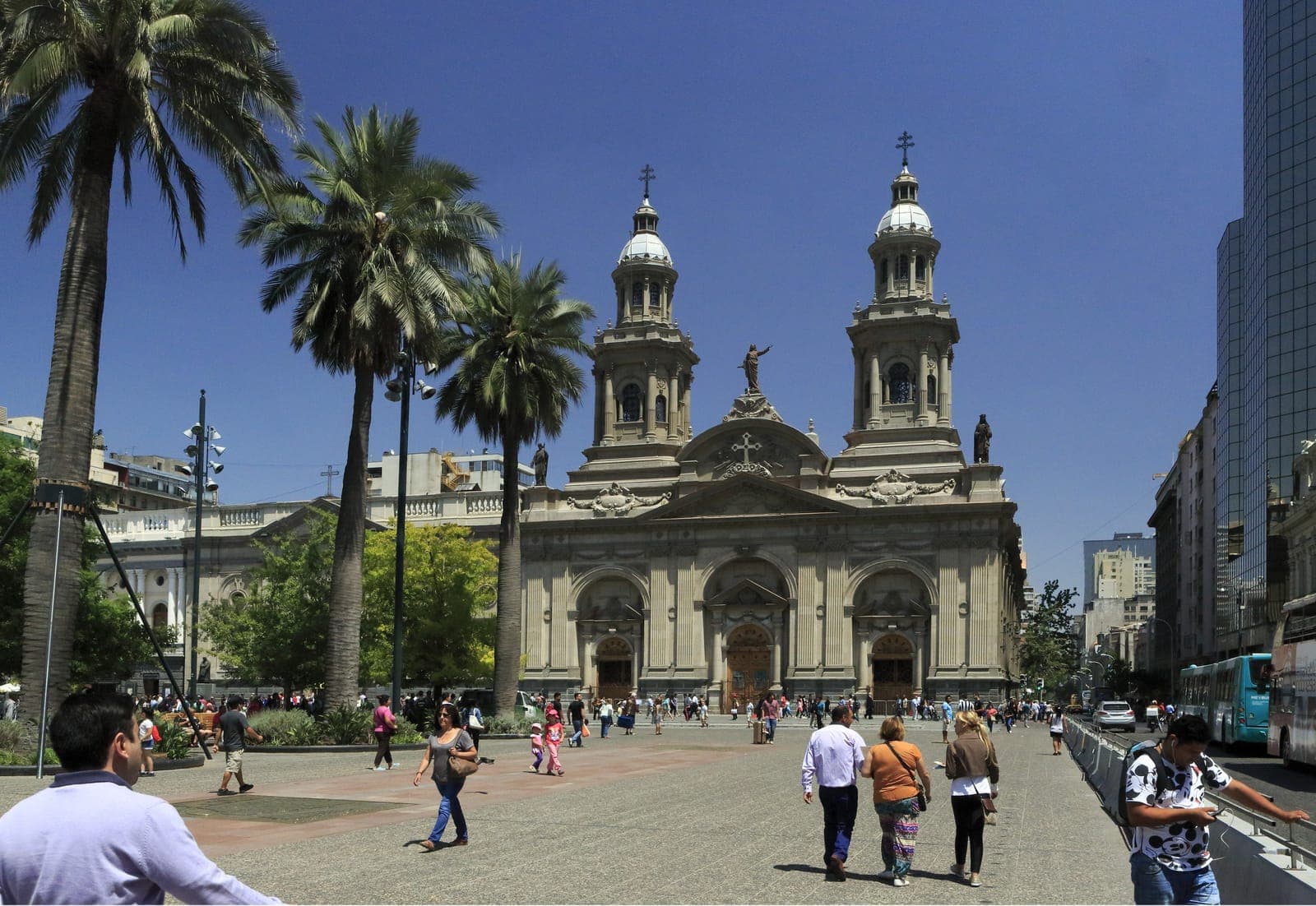
Cover: Plaza de Armas and the Metropolitan Cathedral of Santiago. Photo: Falk2, CC BY-SA 4.0, via Wikimedia Commons.
Downtown Santiago is easy to explore on foot: within a few blocks you'll find the spot where the city was founded, the presidential palace, first-class museums and a hill with views of the Andes. This route fills a relaxed full day, and you can cut it short at any point: there's always a Metro station nearby.
Morning: from the Plaza de Armas to La Moneda
Start at the Plaza de Armas (Plaza de Armas Metro, Lines 3 and 5), where Pedro de Valdivia laid out the city in 1541. Around it are the Metropolitan Cathedral, the National History Museum, in the former Palacio de la Real Audiencia, the Central Post Office and City Hall. The Cathedral is a working church: visit quietly and outside of mass times.
Along Calle Catedral you reach the former National Congress, with its garden and columns, next to the Palace of the Courts. One block away, on Calle Bandera, is the Chilean Museum of Pre-Columbian Art, in the Palacio de la Real Aduana, with ceramics, textiles and stonework from cultures across the Americas.
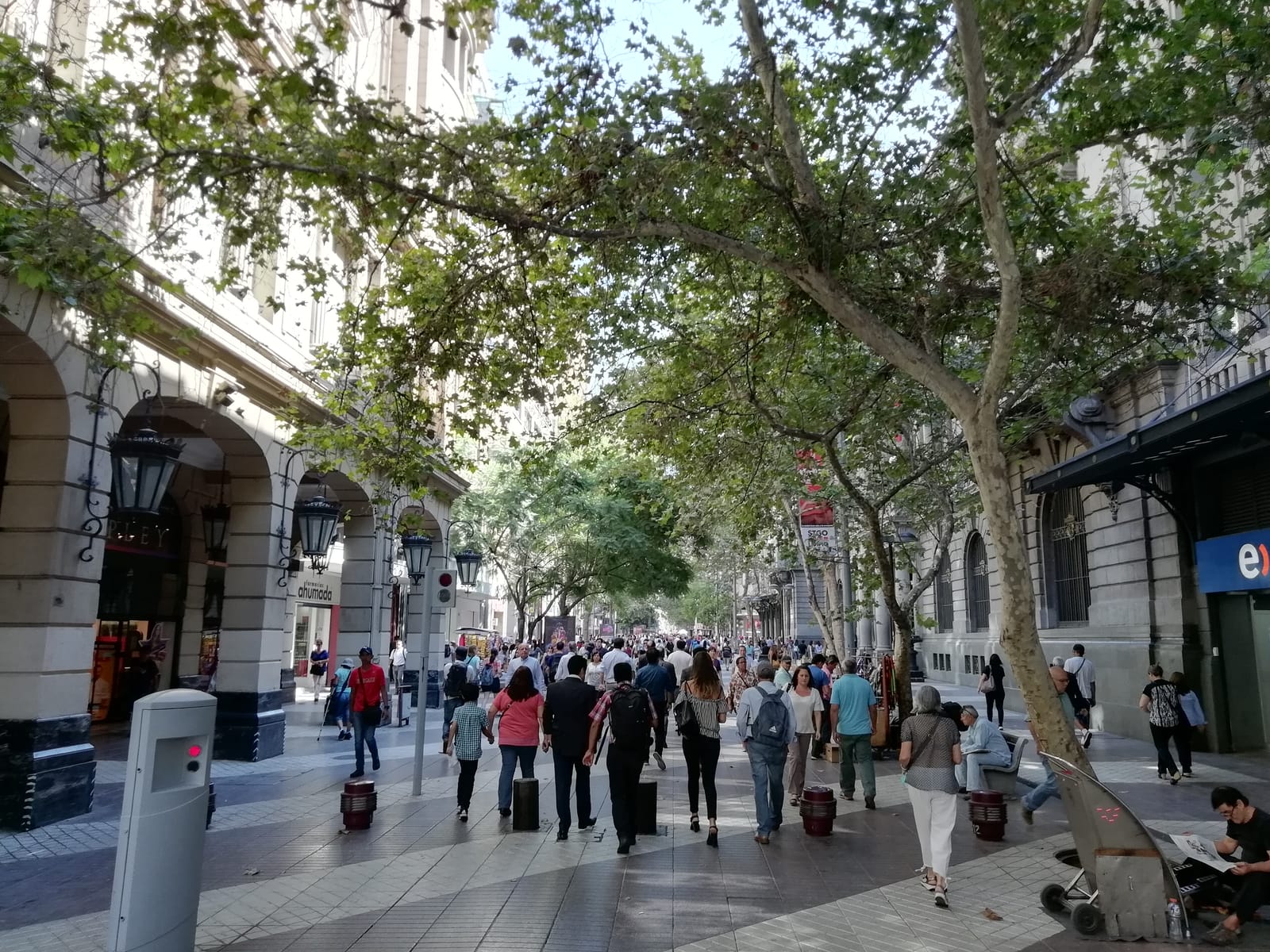
Paseo Ahumada. Photo: ProtoplasmaKid, CC BY-SA 4.0, via Wikimedia Commons.
From there, follow the Ahumada or Huérfanos pedestrian streets to the Palacio de La Moneda, designed by Joaquín Toesca in the late 18th century to mint coins and now the seat of the Presidency. Beneath the Plaza de la Ciudadanía, south of the palace, is the La Moneda Cultural Center, with major exhibitions and the Cineteca Nacional film archive.
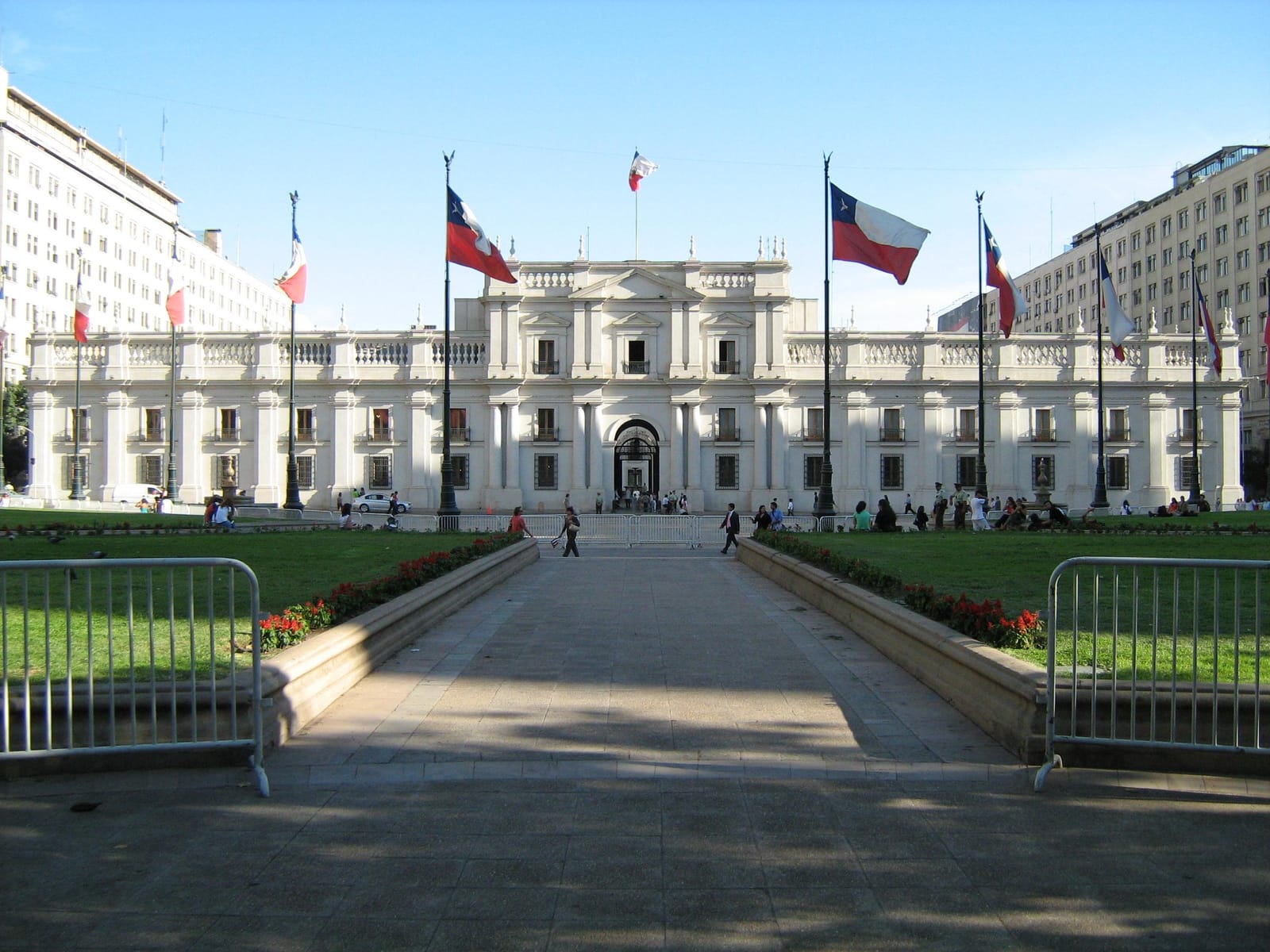
Palacio de La Moneda. Photo: Leopard123, CC BY-SA 4.0, via Wikimedia Commons.
If you have time: on the Alameda, near Universidad de Chile Metro, is the San Francisco Church, the oldest surviving building in Santiago. Behind it begins the París-Londres neighborhood, with curving cobblestone streets. Londres 38 is a memorial site: visit in silence and with respect.
Afternoon: Lastarria, Cerro Santa Lucía and Bellas Artes
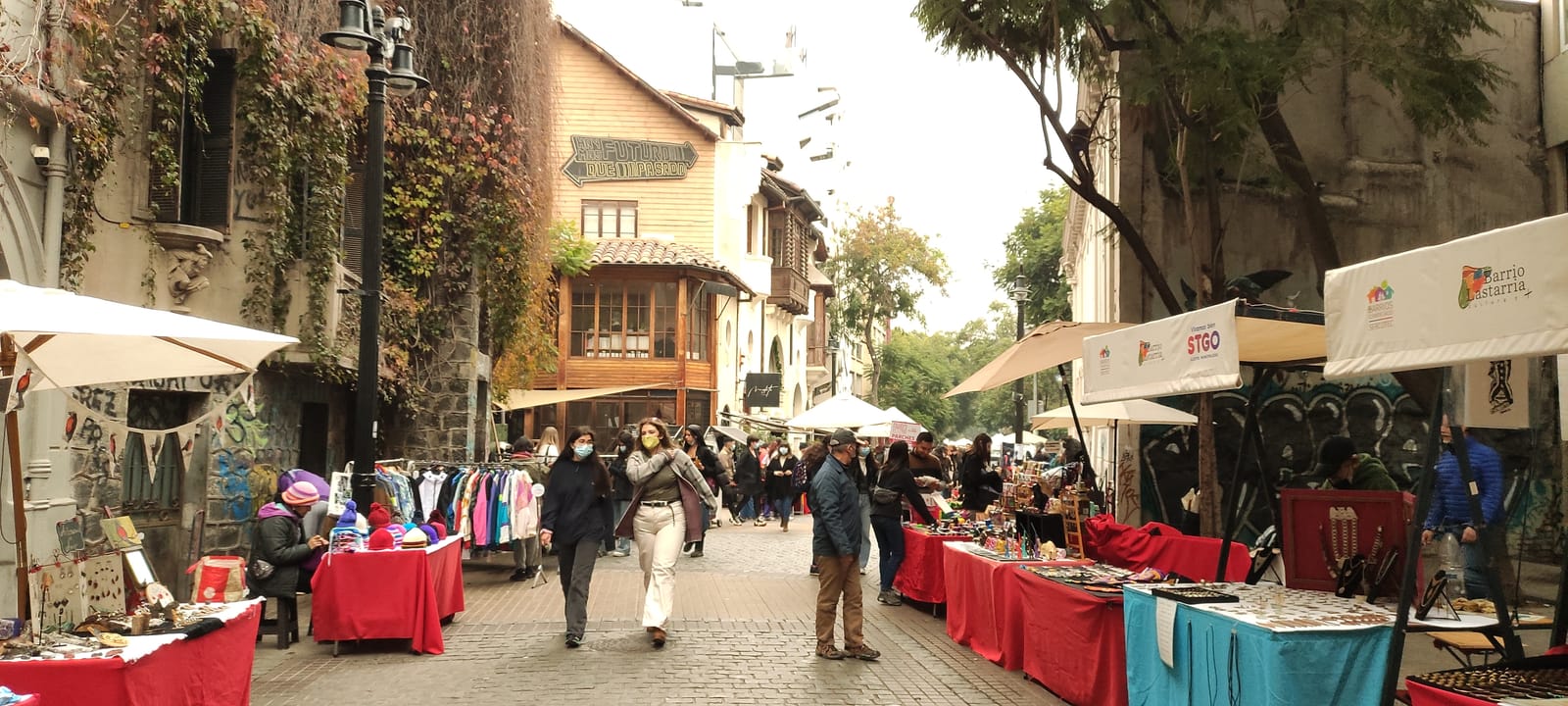
Lastarria neighborhood. Photo: Cristian Coloma, CC BY-SA 4.0, via Wikimedia Commons.
In the afternoon, head to the Lastarria neighborhood (Universidad Católica Metro, Line 1). Calle José Victorino Lastarria, with cobblestones, cafés and bookshops, leads to Plaza Mulato Gil de Castro, home to the Museum of Visual Arts and the Archaeological Museum of Santiago.
From Lastarria, climb Cerro Santa Lucía, the old Huelén hill, via the Neptune Terrace and its stairways up to Castillo Hidalgo. From the upper terraces you can see downtown and, on clear days, the Andes. The climb is short but steep, and some stairs have no railing. Check the hill's opening hours before you go.
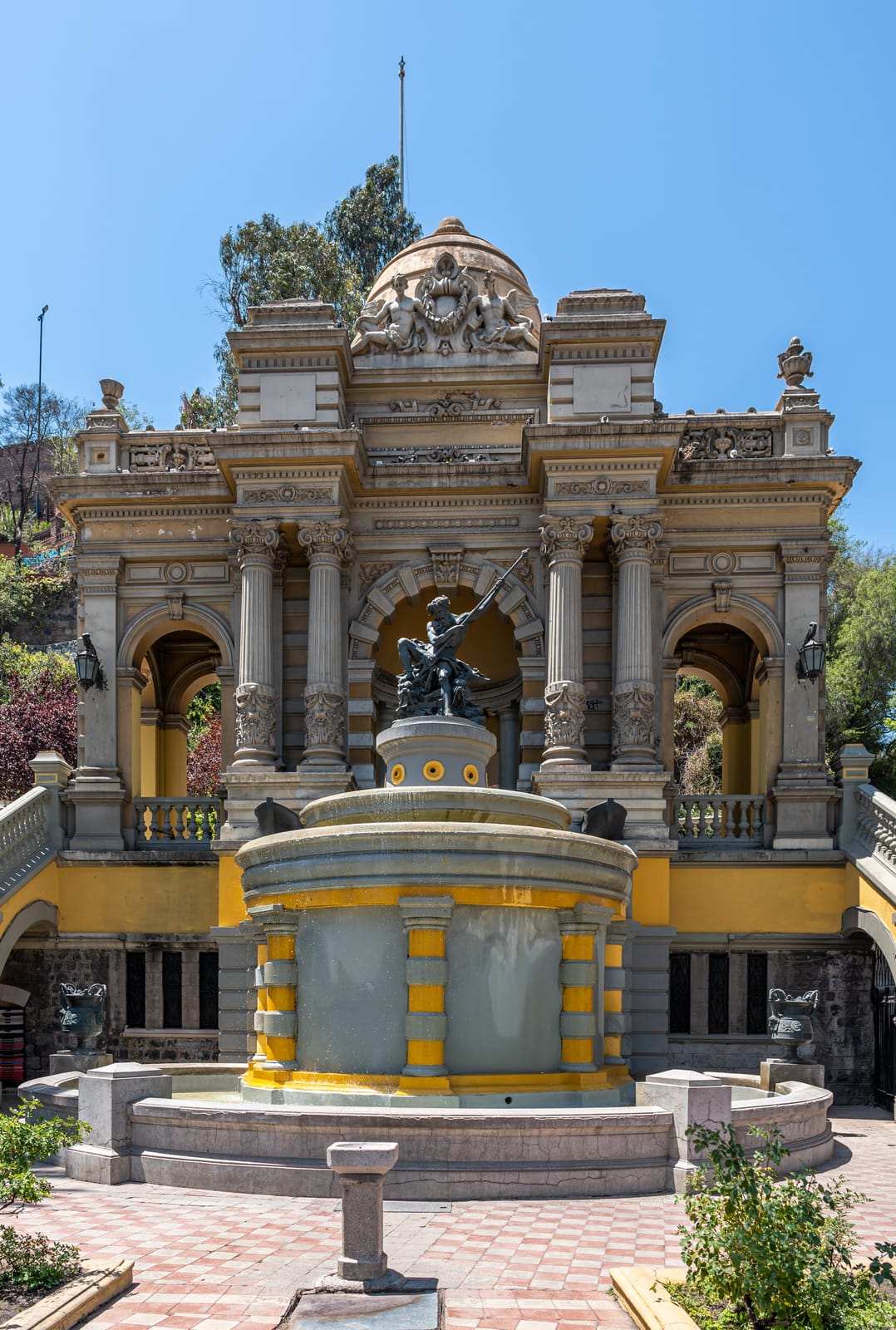
Neptune Terrace, Cerro Santa Lucía. Photo: Rjcastillo, CC BY-SA 4.0, via Wikimedia Commons.
To finish, walk down to Parque Forestal and stroll under its trees to the Palacio de Bellas Artes, home to the National Museum of Fine Arts and the Museum of Contemporary Art. Opposite the museum begins the Bellas Artes neighborhood. Bellas Artes Metro (Line 5) is a few blocks away.
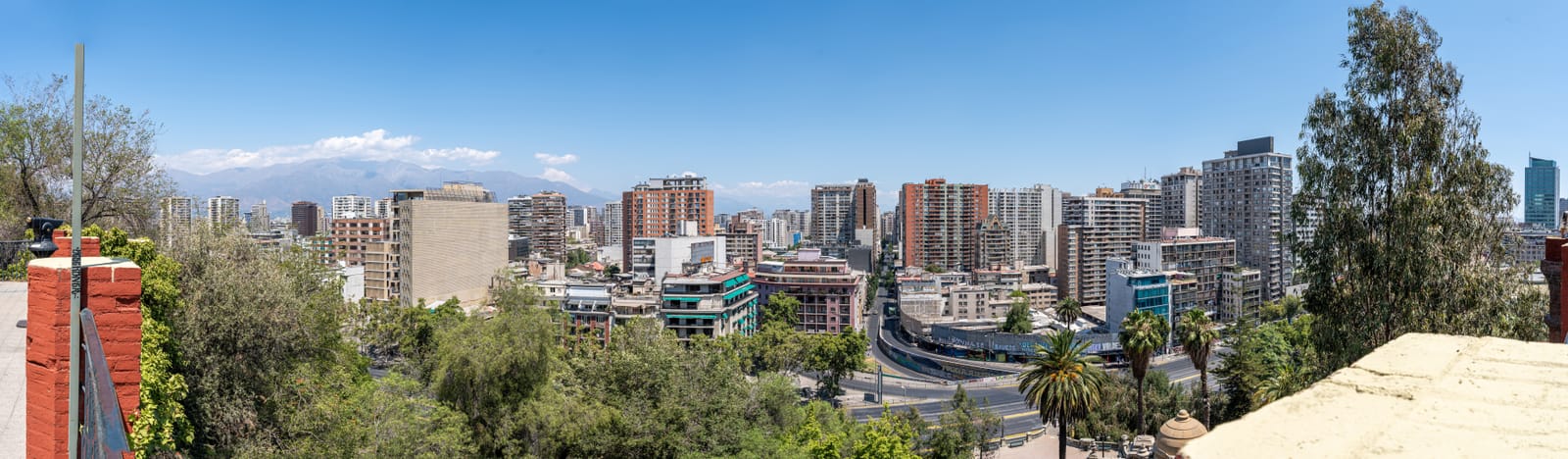
View from Cerro Santa Lucía. Photo: Rjcastillo, CC BY-SA 4.0, via Wikimedia Commons.
Another way to finish: north of the Plaza de Armas are the Mercado Central, opened in 1872 under an iron structure made in England, and the Estación Mapocho, by the river (Puente Cal y Canto Metro, Lines 2 and 3).
Do you have a favorite spot in downtown Santiago? Share it in the comments below.
Official sources
- Museo Histórico Nacional
- Museo Chileno de Arte Precolombino
- Centro Cultural La Moneda
- Museo Nacional de Bellas Artes
- Catedral de Santiago
Community experiences
User experiences, not official information. Always check the official status before you go.
No comments yet. Be the first.