
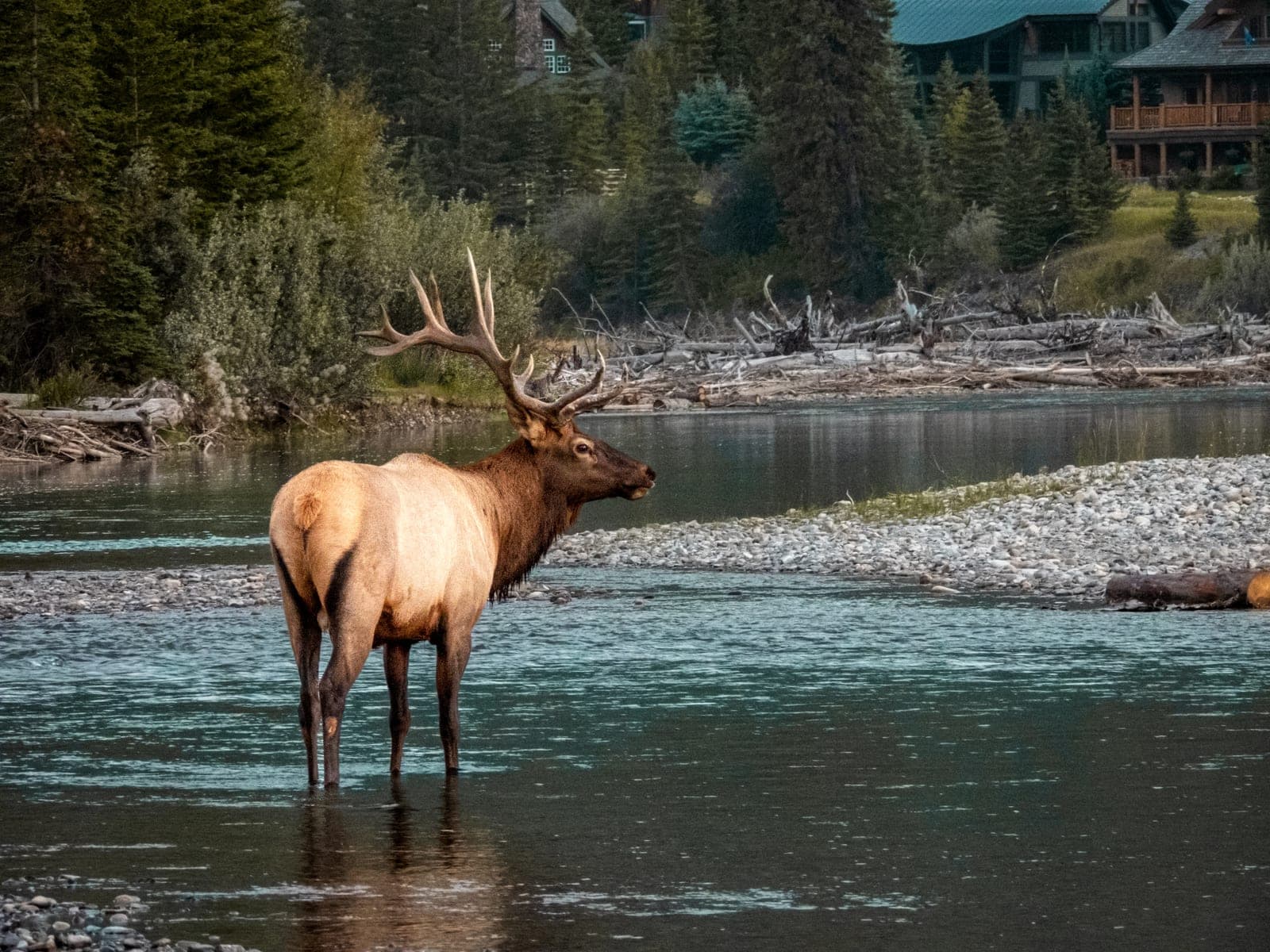
How to see wildlife in the Rockies without putting anyone at risk
🦌 Wildlife📅 Updated September 26, 2026⏱ 4 min read
Cover: elk in a river. Photo: Fabian Caro.
Seeing an elk in the meadow or a bear on a distant slope is one of the best parts of living in or visiting Banff and Canmore. It's also where most people get into trouble, usually by getting too close for a photo.
Here's how to see more wildlife while keeping yourself and the animals safe, using the rules from Parks Canada and Alberta Parks.
When to look
Many animals are most active early in the morning and in the evening. Slow down on the roads at those times, and scan meadows, riverbanks and forest edges.
Some seasons need extra care:
- Elk calving (May–June): mother elk aggressively defend their young.
- Elk rut (late summer and fall): bulls are particularly belligerent.
- Late summer: bears feed heavily on berries near trails and roadsides, and parks post bear warnings for specific areas.
Where to look
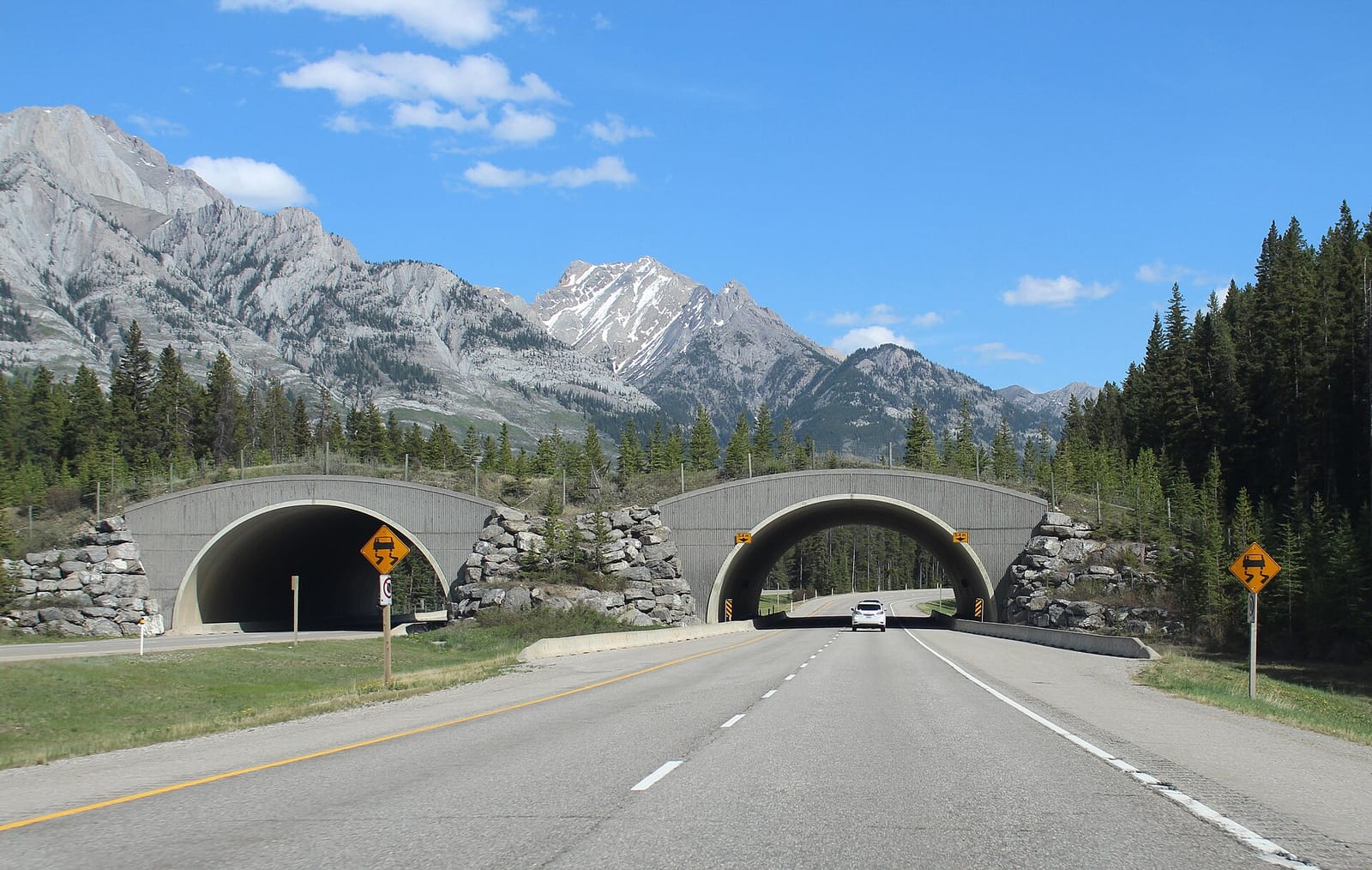
Wildlife crossing on the Trans-Canada, Banff. Photo: Coolcaesar, CC BY-SA 4.0, via Wikimedia Commons.
Wildlife moves through the whole Bow Valley, including in and around the towns. The best tool isn't a secret spot, it's today's information: wildlife warnings and area closures tell you where animals are active right now. Check Today in Banff and Today in Canmore before you head out.
From your car
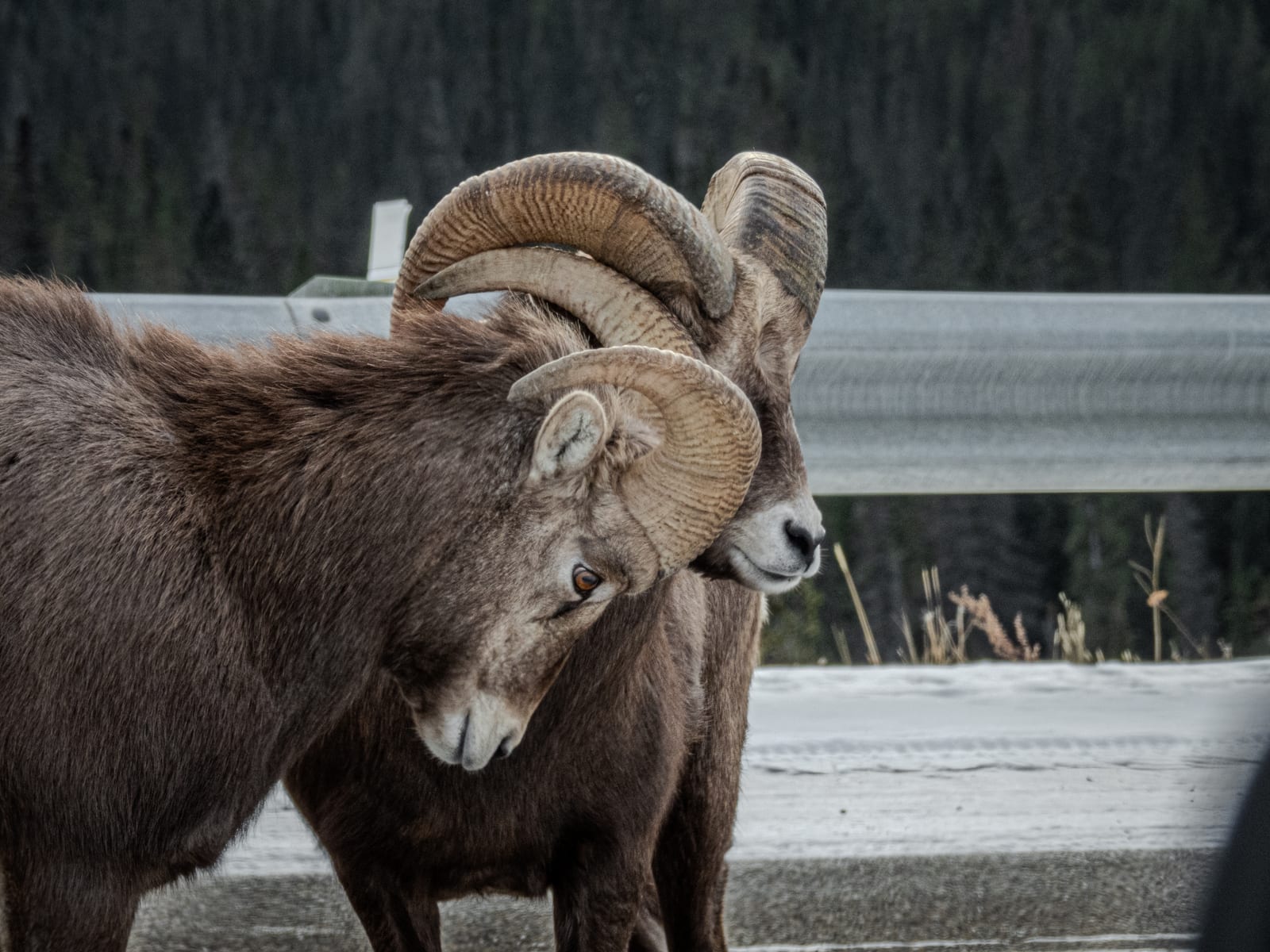
Bighorn sheep by the road. Photo: Fabian Caro.
Most wildlife sightings happen from the road. Parks Canada's rule of thumb: slow down, stay in your vehicle and move on.
Give them space
A zoom lens or binoculars will give you better photos than walking closer. If an animal changes its behaviour because of you, you're too close.
Never feed wildlife
It is illegal to feed, entice or disturb any wildlife in a national park, with fines up to $25,000. That includes leaving food or garbage where animals can reach it. Fed animals lose their fear of people, and that often ends badly for the animal.
On the trail: bear safety
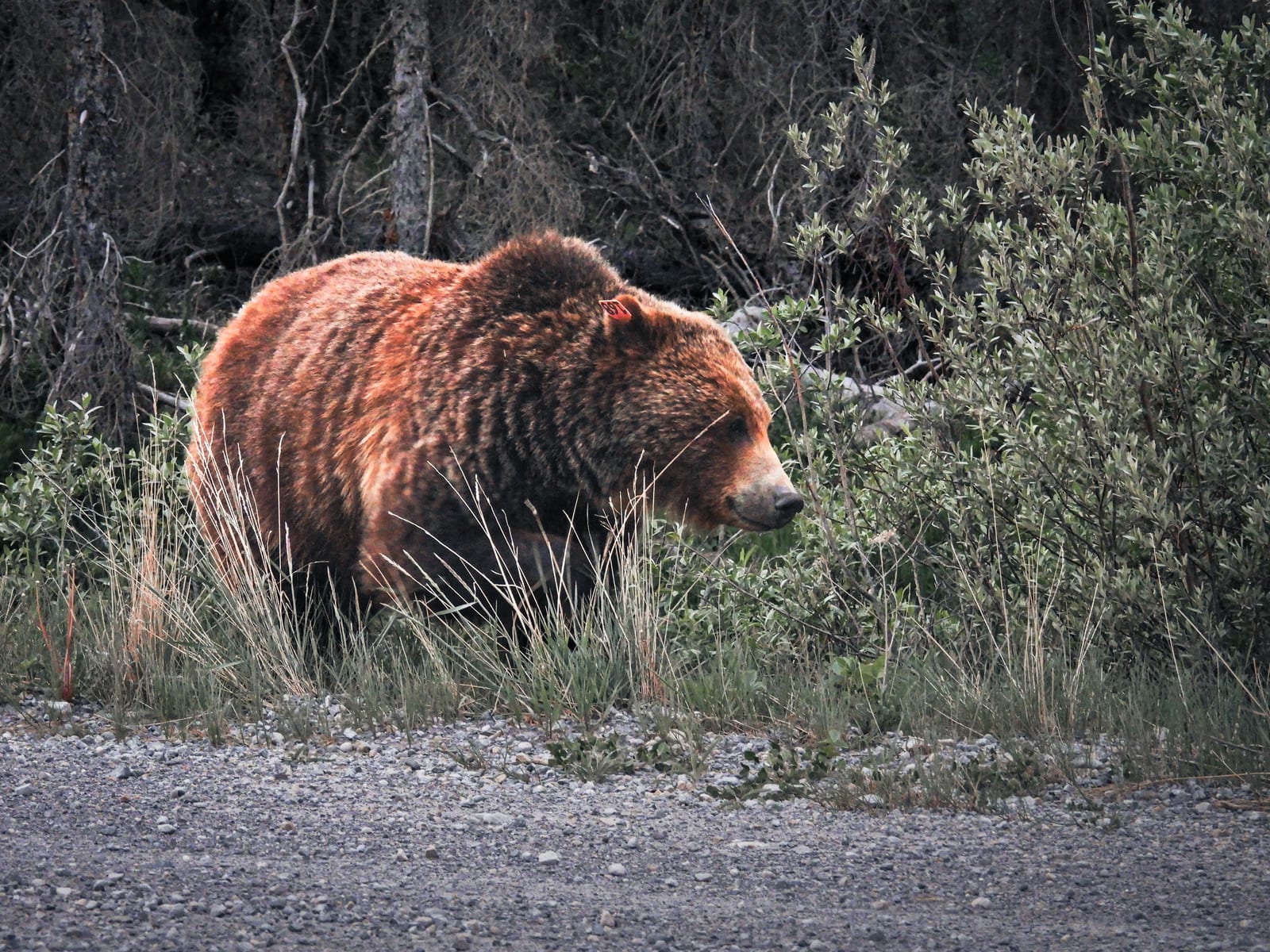
Grizzly bear by the road. Photo: Fabian Caro.
If you meet a bear, stop, stay calm and never run. Speak to it calmly and firmly, and slowly move away without turning your back.
- If the bear is defensive (surprised, protecting food or cubs) and makes contact, play dead: lie on your stomach with your legs apart and your hands behind your neck.
- If the bear is curious or predatory and keeps approaching, use your bear spray, shout and act aggressively. If it attacks, do not play dead: fight back.
Report what you see
Reports help park staff warn others and protect the animals:
- Banff National Park: report bear, cougar, wolf and coyote sightings and encounters to Banff Dispatch at 403-762-1470.
- Kananaskis Country and Canmore area parks: report bear, cougar and problem wildlife sightings to Kananaskis Emergency Services at 403-591-7755.
In an emergency, call 911.
Official sources
- Parks Canada: Safely view wildlife
- Parks Canada: Elk safety
- Parks Canada: Safe travel in bear country
- Parks Canada: Wildlife and you (Banff)
- Alberta Parks: Be Bear Smart (Kananaskis Country)
Community experiences
User experiences, not official information. Always check the official status before you go.
No comments yet. Be the first.